




What are Polythene Gloves?
Polythene gloves are made from polyethene resin, known as commodity resin due to their fast and cheap mass-manufacturing process. The plastic is simply heat-pressed to create the seams of the gloves.
This type of plastic boasts excellent chemical stability and is suitable for one-time use to maintain hygienic conditions in your workplace.
Polythene is commonly used for food wraps, plastic bottles, and gloves. Polythene gloves are ideally suited for fast-paced environments in which hygiene is essential.
The unique design of polythene disposable gloves makes it easy to quickly slip them on and off while working and as such, preferable to other types of gloves.
Different Types of Polythene Gloves and Their Uses
Polythene disposable gloves are used in a variety of industries, particularly where hygiene or cross-contamination is concerned. However, you wouldn’t use the same type of polythene gloves for hairdressing as you would for food preparation.
So, we’ll explain the areas in which polythene disposable gloves are used, and discuss which type of polythene gloves are more suited to which industry.
- Low-Density Polyethylene Gloves
Low-density polyethene gloves are one of the softest and strongest types of polythene gloves. They boast enhanced dexterity over other types of polythene disposable gloves, which makes them perfect for low-risk but demanding professions like hairdressing.
Hair dye doesn’t usually pose an allergy risk to the hairdresser, so slight tearing or piercing isn’t so much of a health risk as it is a risk of dying your skin. However, this, and the accidental mixing of dye is the reason why hairdressers wear gloves in the first place.
So, an effective low-density polythene disposable glove is perfect for use in the salon.

- High-Density Polyethylene Gloves
The difference between high-density and low-density polyethene gloves is the dexterity they provide. The properties of both are identical otherwise.
High-density polyethene gloves don’t provide as much freedom of movement as their counterparts, so they’re far better suited for areas where protection is needed, but the particular movement isn’t necessary.
High-density polyethene gloves are frequently used at petrol stations, shops and food serving stations.
- Cast Polyethylene Gloves
Cast polythene gloves are usually embossed to prevent stickiness when used for prolonged periods. Their intended lengthened use over other types of gloves makes them perfect for healthcare professionals who work long hours.
Embossing creates more grip, which is extremely beneficial to the user, and offers higher sensitivity as a result.
- Thermoplastic Polyethylene Gloves
Thermoplastic polyethene gloves are much thicker than the other gloves on this list. Due to this, they’re relatively elastic and very flexible. As such, they can be used by hairdressers for the same reasons as low-density gloves.
Their thickness allows them to be used for longer periods than the other types of gloves listed above.

The Benefits of Polythene Gloves
Polythene disposable gloves host several beneficial properties that make them suitable for many different applications. So, let’s delve in and find out what they are below:
- Loose Fit
Tight, second-skin gloves aren’t suitable for use in fast-paced environments. Since you’ll probably spend more time trying to get the gloves on and off than you have. Fortunately, polythene disposable gloves are specially designed to fit loosely to maximise workflow and minimise fiddling.
The loose fit of polythene gloves prevents perspiration around your hands while working, which can make for far more comfortable working conditions.
Plastic is essentially non-porous, so it doesn’t take long for your hands to become hot and sweaty. Fortunately, the additional space in the gloves maximises breathability.
- Ambidextrous Design
To suit a fast-paced work environment, polythene disposable gloves are manufactured to be ambidextrous. This means that when they’re removed from the box, they can be worn on either hand. This minimises the time spent putting on the gloves.
- Cost-Efficiency
Due to the disposable nature of polythene gloves, they’re cheap to buy, and even less expensive to make. For example, our boxes of 100 Shermond polythene gloves are available for just £1.20. So you won’t find yourself out of pocket!
- Strength and Durability
Despite their thinness in comparison to other types of gloves, polythene gloves are exceptionally strong. Additionally, the heat-press method of sealing them makes them invulnerable to water ingress.
- Latex-Free
Polythene gloves are latex-free. So you don’t have to worry about experiencing an allergic reaction while using them. Furthermore, the time it takes for polythene gloves to expire is almost two years longer than latex. So they’re a great alternative.
- Powder-Free
Powdered gloves can be irritating to the skin of the user. The powder is applied to some types of gloves to make it easier to put them on and take them off. But this powder can cause something of an allergic reaction to some users, so sometimes they’re not suitable for use.
However, polythene gloves don’t use powder.
- Food Safe
Some types of gloves aren’t safe for use during food handling and preparation, particularly those that contain phthalate and silicone. However, polythene gloves don’t contain these contaminants. So they’re safe for use around food.

The Disadvantages of Polythene Gloves
Although polythene disposable gloves are a very effective method of PPE for those working in customer service, they do have some disadvantages that make them unsuitable for uses outside of these sectors.
- Non-Sterile
Due to the intended use of this particular type of glove, they tend to be packaged non-sterile. So they’re not to be used in highly sterile environments like surgical rooms in hospitals.
- Single-Usage
Polythene gloves are only supposed to be used once before they’re thrown away. This can be annoying if the gloves are only used for a few minutes and become contaminated. But, these gloves must be only used once to ensure they don’t tear or spread contaminants.
- Limited Uses
Polythene gloves are only suitable for a select few applications. They can’t be used in excessively wet environments, or in workplaces where punctures, tears or impacts may be possible.
We have offer a selection of specialised gloves which you can see to discover the types of gloves that are suitable for these types of work environments.
Summary
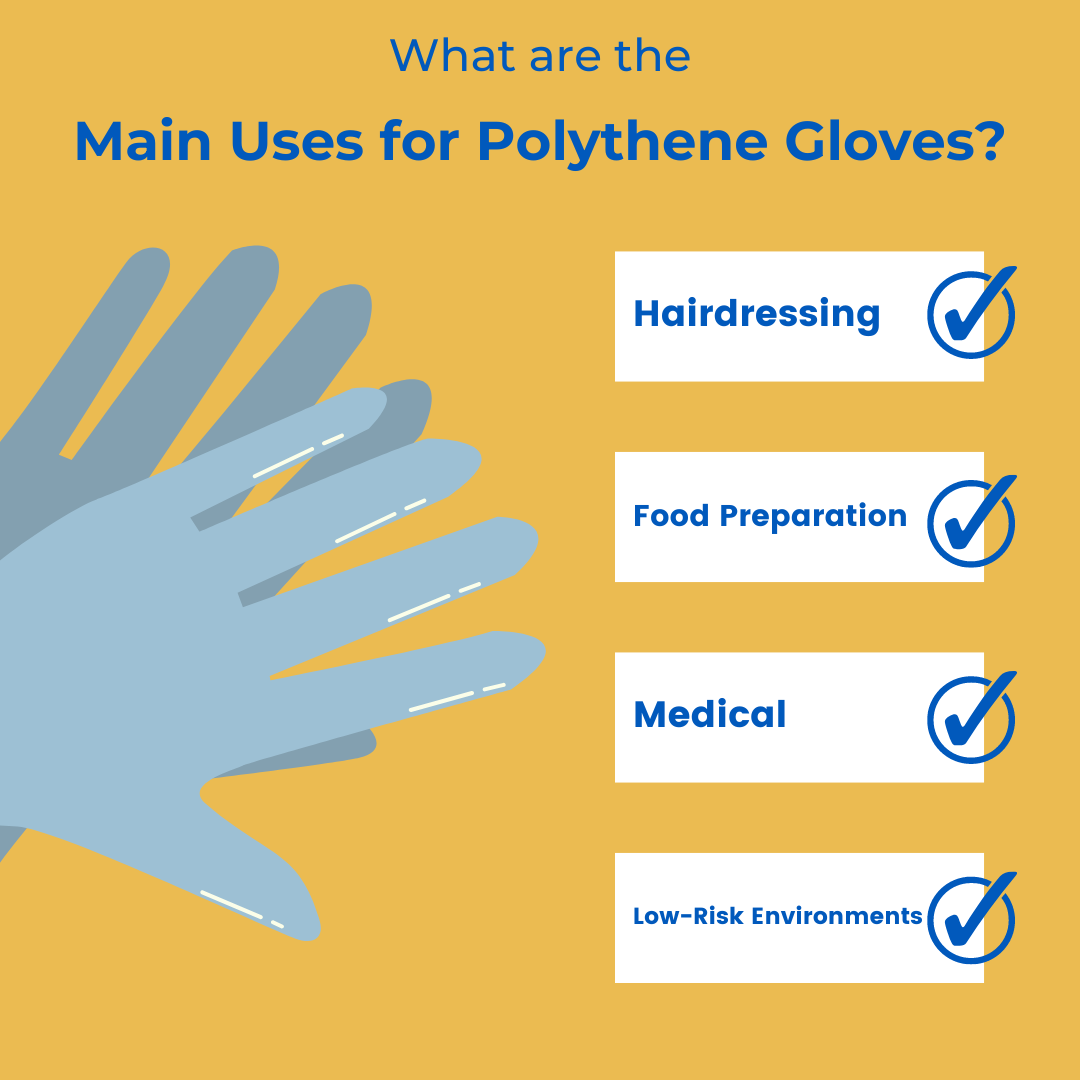
Polythene gloves are best suited for low-risk, fast-paced environments such as hairdressers, food preparation facilities, and medical environments.
We have several types of polythene gloves for sale to help you achieve a safer and more hygienic workspace. If you’d like to bulk-buy polythene gloves, we offer extra discounts to help you get more for less!


